
Educational overview only. Prudent Guardian (www.inspirecodingedu.com) is not an insurance company, broker, law firm, or registered investment adviser, and does not provide personalized insurance, investment, tax, medical, or legal advice. Verify details with licensed professionals and official issuers.
There is a stain on the ceiling. The casualty paragraph is the one you turned to. You tap the crumpled edge of the lease where you folded the page last week, right at the section that governs what happens when property damage cuts into your ability to use your space. The ceiling leak that caused the stain started three days ago, and your property manager still hasn’t responded to your third follow-up email about scheduling a fix.
How casualty clauses define eligible damage
Casualty clauses are written to outline responsibility for sudden, unforeseen property damage that stems from events outside of normal day-to-day use. Most standard clauses cover damage from severe weather, fire, unprovoked vandalism, structural failure from external impact, and burst pipes from uninsulated lines that freeze during unexpected cold snaps, as long as you did not contribute to the event that caused the damage. The clause draws a clear line between damage that renders your space fully usable, partially usable, or entirely undamaged aside from cosmetic blemishes, and that line dictates what repairs are covered, and if you qualify for any temporary rent reduction while work is completed. Your ceiling stain falls into a gray area for now: if it stems from a sudden roof puncture during last week’s hailstorm, it almost certainly qualifies for coverage under the casualty clause, but if it comes from a slow, unaddressed leak that the landlord’s maintenance team ignored for months, it may fall under general maintenance terms instead.
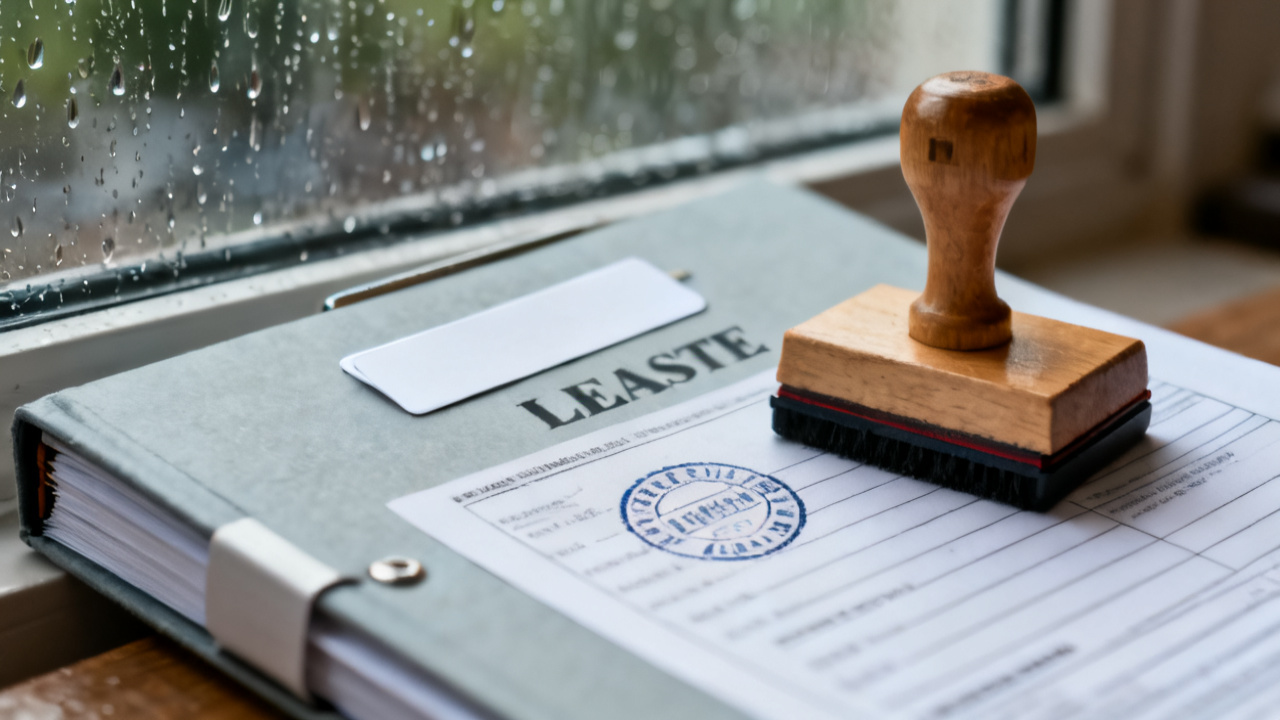
Common carve-outs that shift repair responsibility to you
Every casualty clause includes specific carve-outs that exclude certain types of damage from landlord coverage, even if the damage seems to fit the general definition of a casualty event at first glance. The most common carve-out applies to damage to custom build-outs you installed as part of your move-in: if you upgraded the standard ceiling tiles to acoustic, sound-dampening versions when you first moved into the space, you will be responsible for replacing the damaged tiles even if the leak that ruined them is the landlord’s responsibility to fix. Another frequent carve-out applies to damage you could have mitigated with reasonable action: if you noticed a small drip in the same corner of the ceiling two weeks before the stain spread and chose not to report it, the landlord may reject your casualty claim on the grounds that you allowed the damage to worsen unnecessarily. Minor cosmetic damage that does not impact your ability to use the space for its intended purpose is also almost always carved out: a 6-inch dry stain that does not drip, does not pose an electrical or structural hazard, and does not block access to work areas will not qualify as a casualty event, even if it was caused by a storm.
Damage eligibility threshold comparison
The following table breaks down common types of ceiling damage, how they typically align with casualty clause rules, and who is usually responsible for associated repairs:
| Damage Type | Casualty Clause Eligible | Typical Responsible Party | Rent Abatement Allowed |
|---|---|---|---|
| Sudden ceiling leak from roof puncture caused by 2-inch thunderstorm hail | Yes | Landlord (building structural repairs); you (damage to your personal property/inventory) | Yes, proportional to the share of your space rendered unusable during repairs |
| Slow, gradual ceiling stain from worn roof flashing that degraded over 3 years of unaddressed wear | No (falls under general maintenance carve-out) | Landlord (per standard maintenance terms, not casualty clause rules) | Rare, unless the leak renders 50% or more of your space fully unusable for 7+ consecutive days |
| Ceiling damage from overflow of your unit’s custom installed utility sink that you forgot to turn off | No (falls under tenant-caused damage carve-out) | You (or your business insurance policy) | No |
Illustrative example: If your 3,200 square foot office has 800 square feet of client meeting space rendered unusable for 10 days while hail damage repairs are completed, you qualify for 25% of your $4,800 monthly rent as abatement, adding up to a $400 reduction on your next bill.
Action steps to align requests with clause requirements
Follow these steps to structure your repair request so it aligns with your casualty clause’s requirements and gets prioritized by your property management team:
- Document the full scope of damage the same day you first notice it, including time-stamped photos of the stain, any active dripping, and any impacted equipment, inventory, or work areas in the space. Note the date of the triggering event if you know it (for example, the severe thunderstorm that hit your area last Tuesday, or the record-low overnight temperatures three nights prior).
- Cross-reference the damage details against the casualty clause’s explicit eligibility requirements, marking any language that supports your request for landlord-covered repair and rent abatement, as well as any language that might limit your eligibility. If you use Lease Jacket to flag key clause terms, you can pull up pre-marked sections in seconds instead of re-reading the full 38-page lease.
- Draft your repair request to explicitly tie the damage to the casualty clause’s eligibility rules, instead of framing it as a general maintenance request. General maintenance requests are often scheduled on a 2-4 week timeline, while casualty-related repairs are typically prioritized for assessment within 72 hours per most standard lease terms.
- Submit the request through the formal channel outlined in your lease (usually your property manager’s dedicated work order portal, not a casual text or off-the-cuff phone call), and include all your supporting documentation as attachments. Save a copy of the submission confirmation for your records, so you can prove you submitted the request by the required timeline if questions come up later.
- Follow up in writing 48 hours after submission if you do not receive a formal confirmation that the repair has been scheduled, referencing the casualty clause’s required timeline for response to eligible damage events.
When you revisit this page after submitting your repair request
When you pull this page back up in a few days, you will have already sent your formal request, and you’ll be waiting for a response from your property management team. Start by cross-referencing any response you receive against the clause terms you marked earlier, to confirm that the proposed repair timeline and responsibility assignment matches what your lease requires. If the property manager says the damage doesn’t qualify under the casualty clause, you can pull up the table on this page to compare their assessment against standard eligibility thresholds, and identify what additional documentation you can provide to support your original request, such as an official weather report confirming the hailstorm on the date you cited, or photos showing the leak is actively impacting usable work space. If the repair is scheduled within the required timeline, you can use the notes you jotted on your lease earlier to track how many days the impacted portion of your space is unusable, so you can submit an accurate rent abatement request once the repairs are fully completed and inspected. You don’t need to take any additional action right now beyond waiting for a response, but keeping this page open in a pinned browser tab lets you quickly reference the clause rules and eligibility framework if any questions come up during the repair process. If the repair is completed to your satisfaction and any eligible abatement is applied to your next rent bill, you can close this tab and file your documentation with the rest of your lease records for future reference, in case another casualty event occurs later in your lease term.